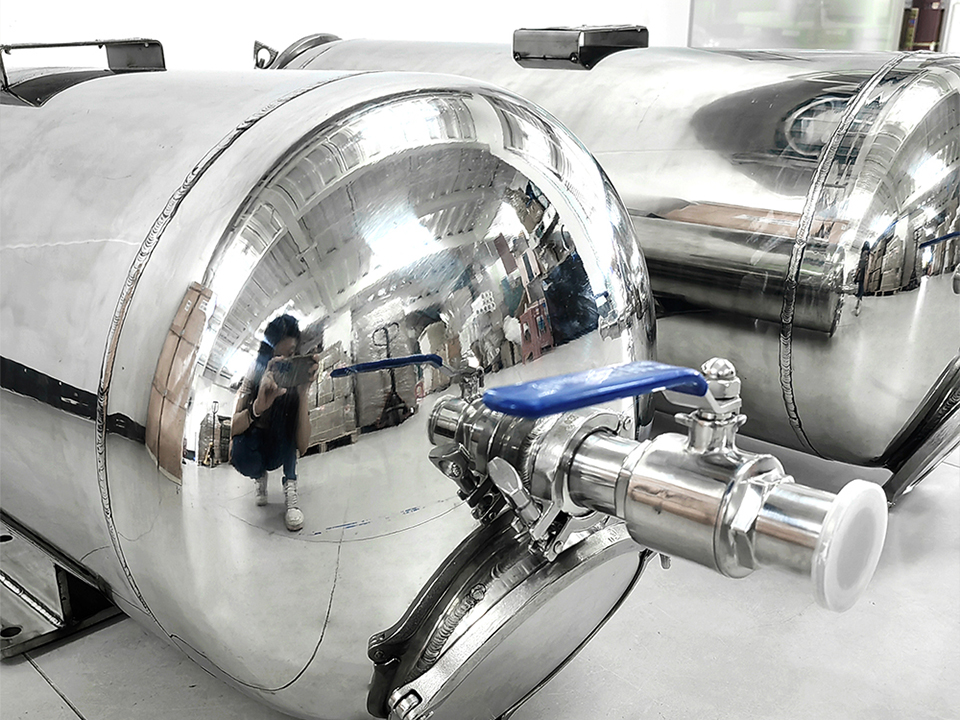
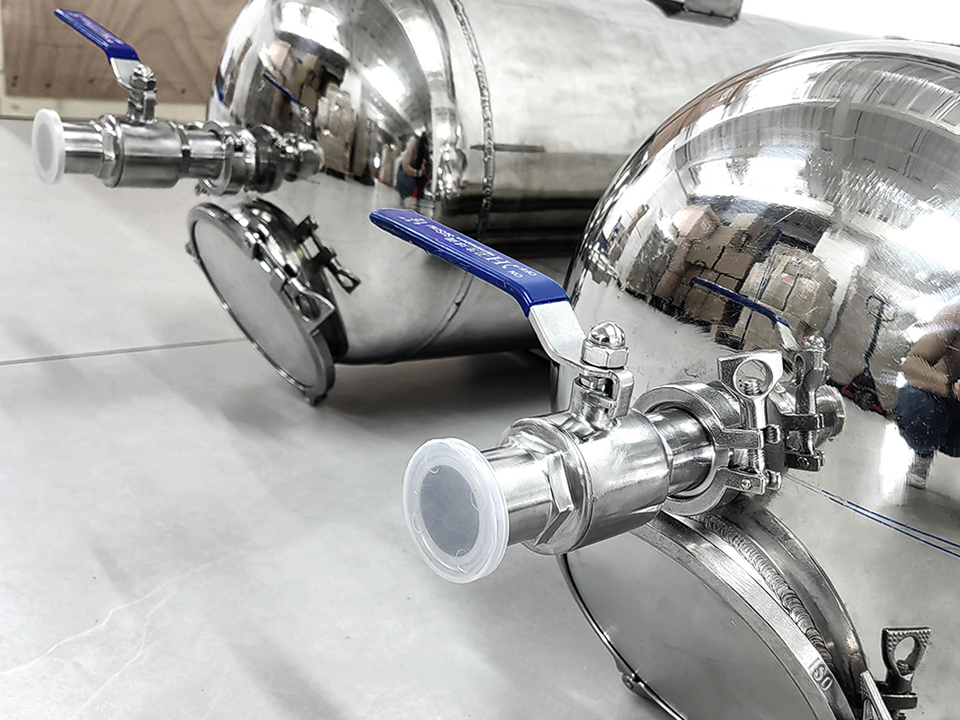
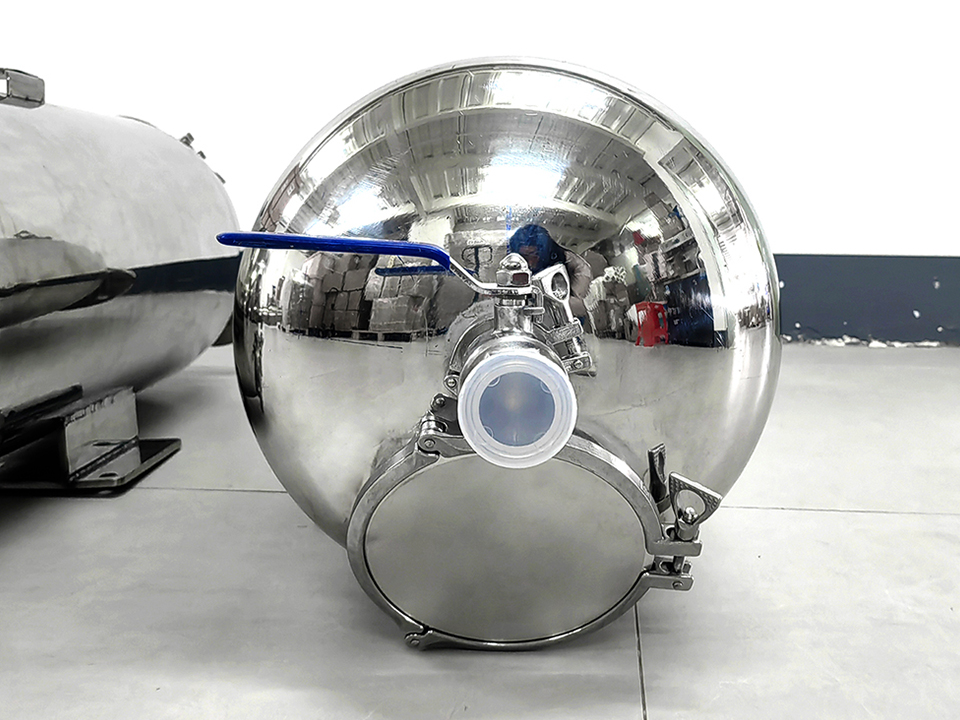
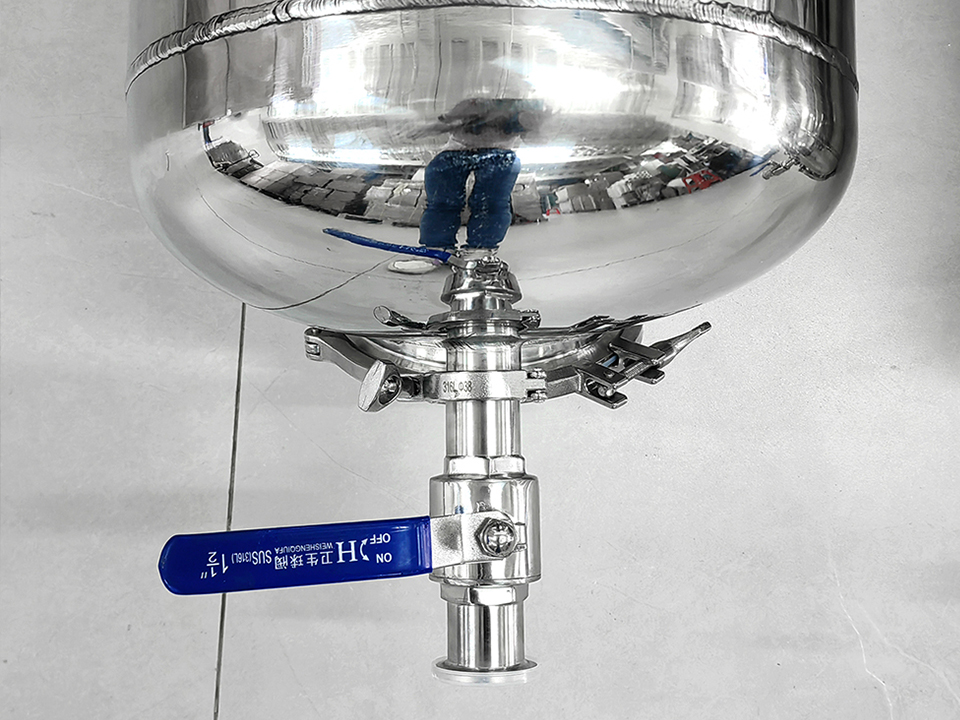
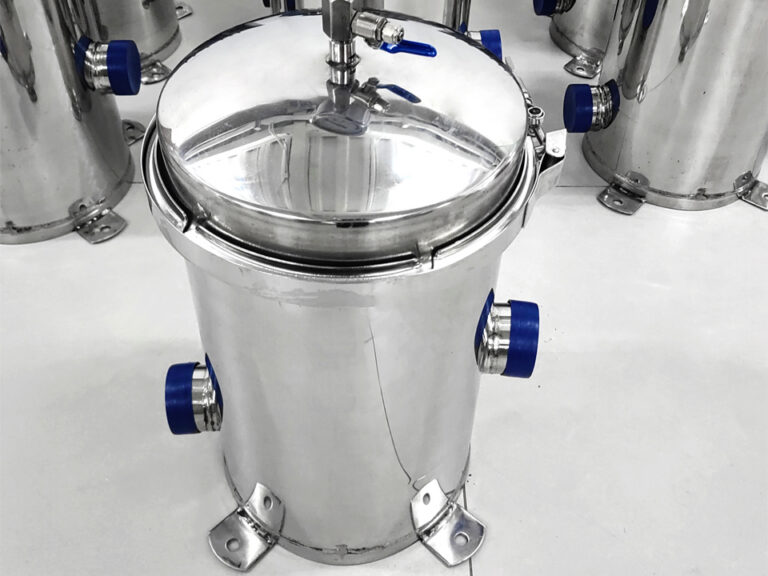
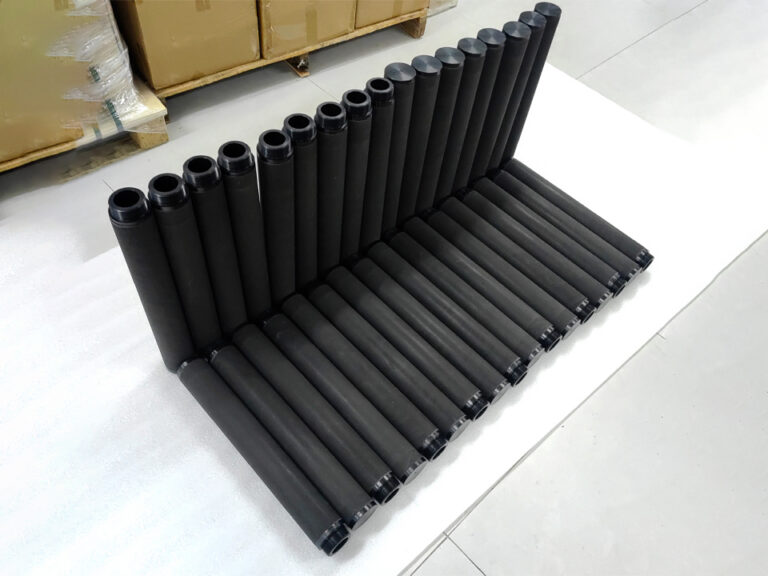
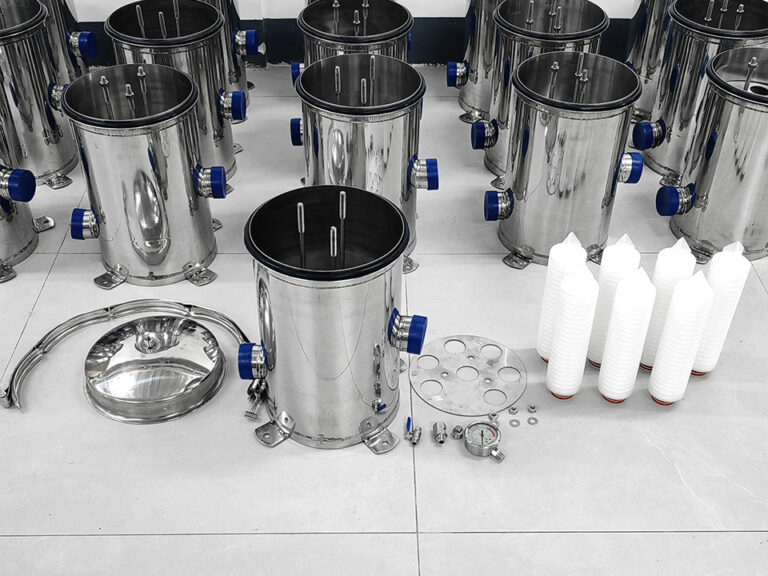
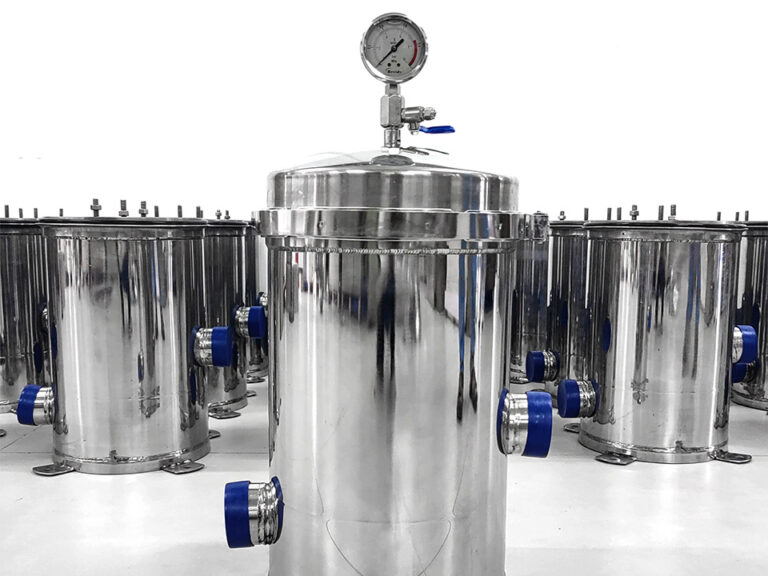
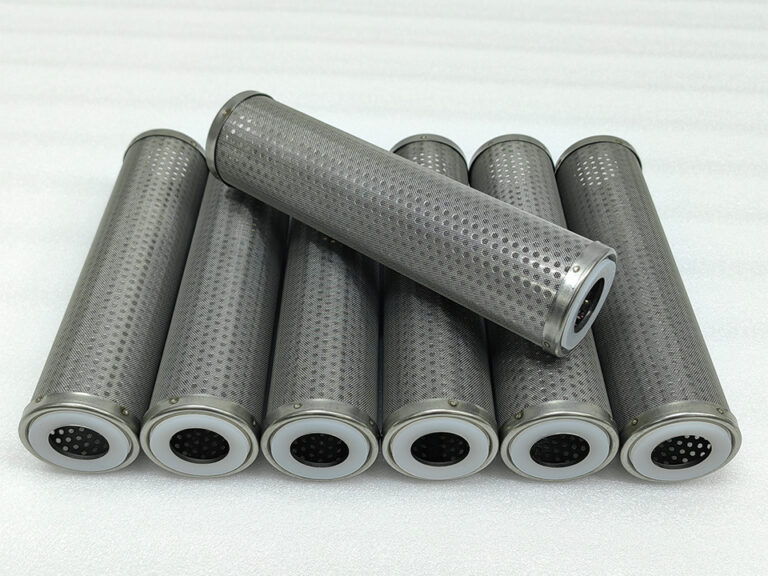
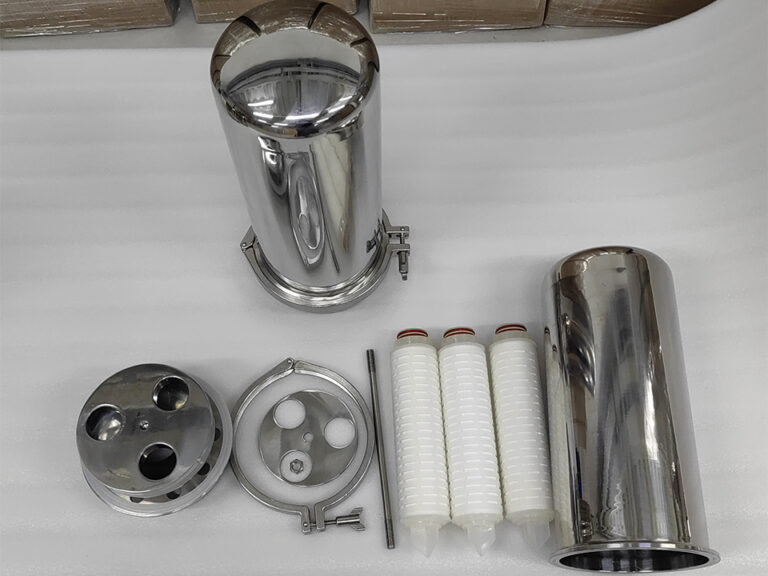
شركة قوانغتشو لفيوان لمعدات تنقية المياه المحدودة هي شركة تصنيع مرشحات صناعية تأسست في عام 2009 تقوم بتصميم وتصنيع علب المرشحات المصنوعة من الفولاذ المقاوم للصدأ، وخزانات المياه المعقمة المصنوعة من الفولاذ المقاوم للصدأ، وعناصر المرشحات، وأكياس المرشحات، ومواد البوليمر الفائق، ومنتجات المرشحات الملبدة. يختار المشترون Lvyuan لدعم تصنيع المعدات الأصلية/التصنيع حسب الطلب، ومراقبة الجودة ISO9001، وشهادات متعددة البلدان.
شركة قوانغتشو لفيوان لمعدات تنقية المياه المحدودة.
Preventive Maintenance SOP for Stainless Filter Housings
A stainless filter real estate seldom fails with theatrical indication. Regularly, the evidence is mundane: a squashed O-ring, a damaged securing face, an unreliable pressure gauge, chloride deposit beneath a clamp, or a differential-pressure pattern that nobody tape-recorded.
Stress hides danger.
Since a refined 316L shell can look immaculate while recurring pressure continues to be trapped between isolation valves, maintenance personnel should confirm zero energy mechanically instead of treating a zero-reading scale, a quit pump, or a driver’s verbal assurance as evidence.
Would certainly you loosen up the closure on look alone?
I would not. And I would certainly deny any kind of preventive maintenance treatment that says “depressurize the real estate” without clarifying exactly just how isolation, draining, airing vent, lockout, confirmation, and stress reaccumulation will be controlled.
The financial argument is similarly blunt. NIST research study contrasting production upkeep approaches located that procedures depending a lot more greatly on preventive and anticipating maintenance had 52.7% much less unexpected downtime and 78.5% fewer issues than the a lot more responsive group. In a separate contrast, precautionary maintenance was related to 48.5% lower unintended downtime and 63.2% fewer flaws than responsive maintenance.
A shiny shell is not a maintenance program.
What This Stainless-steel Filter Housing Upkeep SOP Must Prevent
The purpose of stainless steel filter real estate upkeep is not merely to keep tools tidy. It is to prevent 5 functional failings:
Loss of control: Refine fluid escapes with a damaged seal, loosened closure, split link, faulty vent, or rusty wall surface.
Interior bypass: Fluid circumnavigates the filter bag or cartridge as a result of incorrect seats, missing elements, seal damages, or dimensional mismatch.
Too much differential pressure: A blocked medium, shut shutoff, broke down cartridge, fouled basket, or negative scale develops deceptive or hazardous operating problems.
Product contamination: Recurring cleaner, fibers, corrosion items, old procedure material, lubricating substance, or foreign items go into the downstream system.
Unexpected energy release: Entraped hydraulic, pneumatically-driven, chemical, or thermal power is released while the real estate is being opened up.
That last thing should have more interest than it generally receives. In 2024, control of unsafe energy under 29 CFR 1910.147 was the 3rd most frequently mentioned government OSHA requirement. OSHA completed 34,696 federal evaluations during the same fiscal year.
The difficult fact? Numerous upkeep files are written as equipment-care directions when they need to additionally work as energy-control directions.
Range, Duties, and Needed Proficiency
This SOP can be adapted for:
Single-cartridge and multi-cartridge housings
Single-bag and multi-bag filter real estates
Clamp, V-band, swing-bolt, bolted-lid, and sanitary closures
Kind 304, 304L, 316, and 316L stainless steel housings
It must not replace the housing manufacturer’s operating guidebook, the site lockout/tagout program, the process risk evaluation, or appropriate pressure-equipment demands. Where instructions conflict, the accepted website procedure and original tools maker’s limitations have to control.
Responsibility needs to be separated clearly:
Workflow close down the process, identifies the item in the real estate, confirms procedure problems, and authorizes removal from solution.
الصيانة performs isolation confirmation, opening, cleansing, assessment, element substitute, closure, and mechanical acceptance.
Quality or procedure engineering authorizes cleansing chemistry, rinse endpoints, product compatibility, filter media, and product-contact acceptance standards.
EHS employees authorize the energy-control method, chemical safety equipment, waste handling, and response to harmful residues.
No unclear possession. “Maintenance group” is not a responsible individual.
Establish the Devices Baseline Prior To Scheduling Upkeep
Calendar-only maintenance is lazy design.
A real estate filtering system clean ambient water does not experience the same damage as a real estate processing 70 ° C brine, solvent-based material, sodium hypochlorite, rough pigment, or high-viscosity syrup. The most effective preventive maintenance routine for filter real estates starts with the real obligation, not an approximate month-to-month period.
Develop a tools document including:
Real estate identification number and physical location
Supplier, version, serial number, and year
Stainless-steel grade and surface area coating
Maximum allowable working stress
Style and operating temperature level
Typical flow rate
Typical tidy differential stress
Maximum authorized differential stress
Connection and closure type
Filter-media component number and micron score
Number and size of cartridges or bags
O-ring or gasket material
Accepted lubricant, when applicable
Closure-bolt torque or tightening up sequence
Process-fluid structure and pH
Cleaning chemicals and verified concentrations
Regular operating hours or sets between media adjustments
Tape the initial clean differential pressure after mounting brand-new media. That figure comes to be the operating baseline.
No baseline, no diagnosis.
A rising stress drop typically indicates loading, but a dropping or oddly secure pressure decline can be much more disturbing. It might suggest media rupture, inner bypass, an inaccurately seated cartridge, a missing seal, a damaged pressure gauge, or a modification in process thickness.
Safe Closure, Seclusion, and Zero-Pressure Verification
Never start stainless steel filter housing cleaning up until all dangerous energy has been separated and confirmed.
OSHA’s hazardous-energy criterion needs an energy-control program covering treatments, training, and routine assessments. It additionally requires stored or residual energy to be relieved, limited, or otherwise made safe, complied with by confirmation that seclusion and de-energization have in fact been attained.
Use the adhering to closure sequence as a standard:
Notify affected operators and downstream customers.
Stop the process feed or transfer pump making use of the approved shutdown series.
Close and separate the inlet shutoff.
Close and separate the electrical outlet shutoff.
Separate bypass, recirculation, vapor, pressed air, nitrogen, chemical dosing, and automated valve-actuation resources.
Apply personal or team lockout/tagout gadgets under the site energy-control program.
Open the housing drain to an approved collection or disposal factor.
Open the vent slowly from a safeguarded position.
Wait up until flow from the drain and vent has actually stopped.
Confirm that the local stress gauge checks out absolutely no.
Use an independent confirmation method where the risk analysis needs one.
Examine that pressure can not reaccumulate via leaking shutoffs, thermal development, gravity feed, or linked vessels.
Verify that the process fluid has cooled down to the accepted managing temperature.
Loosen up the closure progressively while standing far from the expected release path.
A scale reading is evidence. It is not proof.
OSHA’s pressure-vessel seal case study defines maintenance on nitrogen vessels operating at approximately 5,000 psig. The agency’s evaluation was unambiguous: pressure needed to be bled off, the vessels safeguarded at atmospheric pressure, and reaccumulation avoided before seal replacement began.
Another OSHA case study entailed sour-water pipeline maintenance needing eleven seclusion valves. Personnel validated nine neighboring isolation factors yet depend on a telephone verification for two remote shutoffs. One return valve had not been shut out, and workers were exposed when they opened the flange.
One missed out on valve victories.
So why do so many filter housing SOPs show a picture of the air vent valve yet say nothing about remote feeds, leaking block shutoffs, shared headers, or pressure reaccumulation?
Filter Real Estate Evaluation List
Evaluate the real estate after getting rid of the invested bag or cartridge and before cleaning hides the evidence.
Outside Inspection
افحص:
Shell damages, distortion, effect marks, and staining
Welds around nozzles, legs, lifting lugs, drains, and vents
Leak tracks or dried process residue
Clamp, V-band, swing bolts, pivot pins, and securing hardware
Missing, stretched, rusted, or dissimilar bolts
Stress gauge condition and understandable array
Vent and drain valve operation
Pipeline strain, unsupported lots, and misalignment
Loosened assistances, supports, casters, or placing braces
Evidence of resonance or duplicated mechanical get in touch with
A closure that needs pressure to straighten is not “tight.” It is misaligned.
Interior Examination
Usage ideal illumination and check:
Pitting, gap deterioration, staining, and rust-colored down payments
Item accumulation under baskets and support plates
Scrapes across sealing surface areas
Damaged cartridge locating cups, springs, poles, and adapters
Deformed or cracked perforated baskets
Damaged welds or loose interior components
Foreign product
Dead areas that do not drain pipes
Proof of filter-media collapse or bypass
Residue under O-rings and inside gasket grooves
Stainless-steel is corrosion-resistant, not corrosion-proof. Chlorides, elevated temperature level, low pH, oxidizing chemicals, down payments, surface area damage, and oxygen-starved holes can raise the threat of localized matching or gap rust. Small surface area openings might hide substantially larger assault below the visible surface area.
Do not brighten away dubious matching before documenting its area and depth.
Stainless-steel Filter Real Estate Cleansing Treatment
The cleaning approach should be based on the contaminant, stainless quality, surface coating, elastomer, filter task, and downstream tidiness need.
I do not accept “clean thoroughly” as a direction. It can not be audited, repeated, verified, or protected after a contamination event.
Utilize this sequence:
Photograph unusual deposits, corrosion, harmed media, or bypass proof.
Remove huge solids with a devoted nonmetallic scrape or approved device.
Pre-rinse using compatible water or process liquid at an accepted temperature level.
Apply the verified detergent or cleansing option.
Tidy the covering, cover, sealing groove, basket, support plate, drainpipe, and vent flows.
Use nonabrasive pads or brushes dedicated to stainless equipment.
Rinse until the defined endpoint is gotten to.
Inspect under ideal lights.
Drain fully and avoid stationary fluid from staying in crevices.
Dry the tools when called for by the process or storage space procedure.
Record the cleaner, focus, temperature, get in touch with time, and rinse outcome.
Possible cleaning chemistries consist of alkaline remedies such as salt hydroxide, NaOH; oxidizing representatives such as hydrogen peroxide, H ₂ O TWO; acidic items formulated for mineral scale; and process-specific cleaning agents. Selection can not be made from the stainless grade alone because seals, instruments, weld condition, temperature level, focus, and direct exposure time likewise matter.
Avoid carbon-steel brushes, normal steel wool, contaminated tools, and unauthorized abrasive substances. They can damage the surface or transfer iron contamination.
And be questionable of chlorides.
Hydrochloric acid and various other chloride-containing cleaner can create a matching threat on stainless-steel. Sodium hypochlorite, NaOCl, additionally calls for a duty-specific compatibility testimonial rather than laid-back presumptions based upon the word “stainless.”
For hygienic or high-purity solution, define the rinse endpoint numerically. Relying on the validated procedure, that might consist of pH, conductivity, complete organic carbon, visual clarity, smell, microbial limitations, or the lack of a certain chemical residue.
“Looks tidy” is not a measurement.
Filter Housing O-Ring Assessment and Substitute
O-rings and gaskets prevail failure factors because they experience compression, stress cycling, temperature level modifications, cleaner exposure, procedure chemistry, managing damage, and repeated setup.
Get rid of the seal without scraping its groove. Clean both the seal and groove, after that check for:
Long-term flattening or compression set
Cuts, nicks, fractures, or missing product
Swelling or dimensional development
Setting or loss of flexibility
Softening, tackiness, or surface area failure
Blistering
Extrusion marks
Twisting
Chemical discoloration
Embedded bits
Wrong cross-section or diameter
Replace any questionable seal. I would rather discard a serviceable-looking O-ring than accept one that can not reliably return to its initial shape.
Common products include:
EPDM: Frequently selected for water, vapor, and lots of alkaline cleaning duties
FKM: Regularly picked for oils, fuels, and specific chemical or elevated-temperature applications
Silicone: Used in some hygienic and temperature-sensitive responsibilities
PTFE or PTFE-encapsulated seals: Utilized where more comprehensive chemical resistance is needed, based on installation and recuperation constraints
NBR: Common in oil-related service but not global across oxidizers or heats
The material name alone is insufficient. The maintenance record should reveal the specific accepted substance, firmness where specified, maker, part number, and lot traceability where product high quality requires it.
Do not apply oil unless the lube is approved for the process, seal material, temperature, and downstream product. Excess lubricant can cause contamination, collect fragments, or permit the seal to move throughout closure.
Cartridge and Filter Bag Maintenance
Numerous apparent housing failures are media-selection failings.
A bag that stretches, a cartridge with the incorrect end arrangement, or a seal that does not match the adapter can produce internal bypass while the real estate remains externally completely dry. The driver sees typical pressure. The downstream process sees contamination.
For bag-filter applications, examine the support basket for broken cables, sharp sides, collapsed openings, altered edges, and product accumulation. Verify that the preserving ring and bag collar seat equally.
Drinking-water and prefiltration trains might use organized activated-carbon and PP prefilter cartridge assemblies, however each phase has to still match the housing geometry, flow, stress decline, temperature, hygiene technique, and water-quality purpose.
Never mix media since it “fits.”
Ideal Preventative Upkeep Set Up for Filter Housings
The table below is a starting point, not an universal mandate. Shorten intervals for high-cycle, abrasive, corrosive, sanitary, harmful, or temperature-variable service.
Frequency or Trigger
Maintenance Job
Minimum Approval Requirement
Needed Activity When Inappropriate
Every shift or batch
Record inlet pressure, outlet pressure, differential pressure, flow, and temperature
Analyses continue to be within the authorized operating envelope and adhere to a plausible pattern
Verify gauges, shutoffs, media condition, thickness, and flow before proceeding
يومياً
Check for outside leak, resonance, uncommon sound, discoloration, or closure movement
No visible leakage, mechanical movement, or abnormal residue
Separate the housing and explore
Weekly
Examine gauge readability, air vent, drain, closure equipment, supports, and linked piping
Parts remain operable, aligned, supported, and undamaged
Fixing or change before the next solution cycle
At every media modification
Separate, drain, air vent, clean, examine internals, check seals, validate media seating
Zero stress validated; real estate tidy; internals undamaged; appropriate media and seal mounted
Hold out of service up until remedied
Monthly
Testimonial differential-pressure trends and media life
Filling pattern follows verified operating history
Check out abrupt modifications, shorter cycles, or inexplicable security
No distortion, pitting progression, damaged assistance parts, or unreliable instruments
Fixing, examine deterioration, or replace components
Semiannually
Evaluation chemical compatibility and operating conditions
Real chemistry, pH, temperature, and cleaner usage match the accepted basis
Reassess products and maintenance regularity
Each year
Do comprehensive mechanical inspection and instrument confirmation throughout shutdown
Stress limit, closure, seals, sustains, instruments, and documents continue to be appropriate
Design testimonial, repair work, or replacement
After an upset
Evaluate following overpressure, thermal trip, water hammer, chemical adventure, or media collapse
No irreversible deformation, seal damages, deterioration, or instrument mistake
Maintain isolated pending design disposition
After repeated leak
Conduct root-cause evaluation
Reason is recognized and completely fixed
Do not treat repeated seal substitute as a full repair service
The 2024 CDC Model Aquatic Wellness Code is not an industrial filter-housing criterion, but its documentation model is useful: devices manuals ought to define cleansing procedures, replaceable components, maintenance regularities, filter differential-pressure requirements, calibration requirements, and troubleshooting processes. That is the level of specificity a severe industrial filtration upkeep SOP must imitate.
Closure, Restart, and Leak Checking
Before shutting the real estate:
Verify that no tools, cloths, product packaging, old seals, or loose components stay within.
Verify that the basket, assistance plate, cartridge adapters, springs, and retainers are mounted properly.
Validate media component number, micron rating, amount, size, and positioning.
Set up the authorized O-ring or gasket without twisting.
Examine that securing surface areas are clean and undamaged.
Straighten the lid without making use of closure hardware to pull a distorted assembly right into position.
Tighten up clamps or screws making use of the accepted sequence and torque.
Close the drain.
Maintain the vent open during preliminary loading where the authorized start-up treatment requires air displacement.
Present liquid slowly.
Air vent trapped air safely.
Shut the air vent after a steady liquid stream appears, when proper for the process.
Elevate pressure slowly while inspecting the closure, air vent, drainpipe, gauge ports, and procedure connections.
Record the tidy differential pressure at the verified operating circulation.
Do not tighten up a pressurized closure to quit leak unless the producer’s authorized treatment expressly allows it. Separate and depressurize the housing first.
Reactivate acceptance should require:
No visible leakage
Secure stress
Correct shutoff placement
Validated circulation
Differential pressure within the clean-media range
No uncommon resonance
No downstream contamination alarm system
Finished upkeep record
Formal return-to-service permission where required
Upkeep Records That Expose Problems As Opposed To Concealing Them
No record, no upkeep.
The finished work order need to catch:
Tools recognition
Date and time
Running hours or batch count
Product previously filteringed system
Inlet, electrical outlet, and differential stress before shutdown
Media eliminated and factor for adjustment
Media installed, consisting of part and whole lot numbers
O-ring or gasket product and part number
Observed deterioration, damage, or residue
Pictures of uncommon findings
Cleaning chemical, focus, temperature, and get in touch with time
Rinse approval result
Components changed
Closure torque where specified
Differential pressure after restart
Professional and reviewer
Follow-up job order or design disposition
Trend the data. A cartridge that when lasted 20 days but now lasts eight days is informing you something regarding the process, pretreatment stage, media spec, flow, contaminant load, or bypass condition.
Replacing it much faster is not root-cause analysis.
Red Flags That Call For Immediate Design Review
Get rid of the real estate from solution when inspection finds:
Deep or expanding pitting
Cracks in the shell, lid, weld, clamp, or support
Closure distortion
Repeated O-ring extrusion
Failure to achieve no stress
Stress reaccumulation after draining pipes
Damaged threads or missing out on fasteners
Irreversible shell contortion
An unreliable or inaccurately varied gauge
An air vent or drain pipes that can not be gotten rid of
Repetitive leak after proper seal substitute
Evidence of cartridge or basket collapse
Unknown stainless grade or seal material
Procedure over documented pressure or temperature restrictions
Do not improvise fixings on a pressure border. Grinding, welding, machining, clamp replacement, and stress testing require an authorized design treatment and properly qualified employees.
الأسئلة الشائعة
How Often Should Stainless Steel Filter Housings Be Maintained?
A stainless-steel filter housing should be maintained at every media change and inspected on a risk-based routine tied to differential pressure, fluid chemistry, temperature level, batch count, operating hours, and contamination tons, rather than by a calendar period alone, due to the fact that service seriousness differs greatly between applications.
As a standard, record operating problems each change, examine outside elements weekly, review fads monthly, evaluate inner parts at every media change, and complete a thorough mechanical testimonial annually. High-chloride, rough, dangerous, sanitary, or high-temperature applications might require much shorter periods.
Exactly how Do You Clean a Stainless Steel Filter Housing?
An appropriate stainless-steel filter housing cleaning treatment eliminates invested media, loosened solids, procedure movie, and cleaner deposit without scratching the passive surface area, contaminating the downstream line, attacking seals, or leaving chloride-rich fluid entraped in crevices; the accepted chemistry, concentration, temperature level, call time, and rinse endpoint should be recorded.
Usage devoted nonmetallic tools, a compatible cleaner, regulated mechanical action, and a verified rinse. Pay particular focus to gasket grooves, baskets, drainpipe passages, air vent passages, assistance plates, and other places where stagnant deposit can continue to be.
When Should a Filter Real Estate O-Ring Be Changed?
Filter real estate O-rings ought to be replaced whenever they show long-term flattening, cuts, swelling, hardening, tackiness, chemical attack, extrusion, twisting, or loss of elasticity, and also at any confirmed preventive period developed by the seal manufacturer, process certification, or maintenance background, even when no exterior leak is yet visible.
Change seals after an incompatible chemical exposure or temperature trip. A seal might additionally call for replacement when its identification, compound, storage background, or setup history can not be validated.
What Differential Stress Should Trigger Filter Substitute?
The proper cartridge or bag changeout differential stress is the incurable value approved by the filter-media and housing manufacturer for the specific flow, thickness, temperature level, and procedure task; a global number is hazardous due to the fact that the exact same stress drop can stand for normal loading, media collapse, bypass, shutoff imbalance, or gauge error.
Develop the tidy differential pressure at normal flow, fad the rise, and explore abrupt adjustments. Never ever go beyond the media collapse limitation, the housing operating limitation, or the validated procedure restriction.
Can Type 304 Stainless Steel Be Utilized Rather Than 316L?
Kind 304 stainless steel can be suitable for lots of water and low-chloride obligations, while 316L normally offers far better resistance to chloride-related matching; neither grade is immune, so worldly option has to think about chloride concentration, temperature level, pH, oxidizers, weld condition, crevices, cleaning chemistry, pressure, and expected life span.
Do not upgrade or downgrade products by behavior. Testimonial the full process chemistry, including periodic cleaning agents and distressed conditions, due to the fact that quick chemical exposure can control material viability greater than regular operation.
Put the SOP Under Pressure Prior To the Real estate Is
Use this precautionary upkeep SOP as a controlled layout, then include the real housing model, stress limits, valve diagram, filter-media spec, seal substance, cleaning up chemistry, lockout points, inspection frequency, approval requirements, and accountable workers.
That work is not bureaucracy. It is the distinction between a maintenance paper that inhabits a binder and one that protects against bypass, contamination, downtime, and injury.